
Product Introduction
A belt conveyor is a mechanical device that uses a continuously circulating conveyor belt as both the traction and load-carrying component, achieving continuous material transport through friction drive. It transfers power via the friction between the drive pulley and the conveyor belt, moving materials from one location to another. Widely used across industrial production and logistics, the belt conveyor is a core infrastructure component of modern material handling systems.
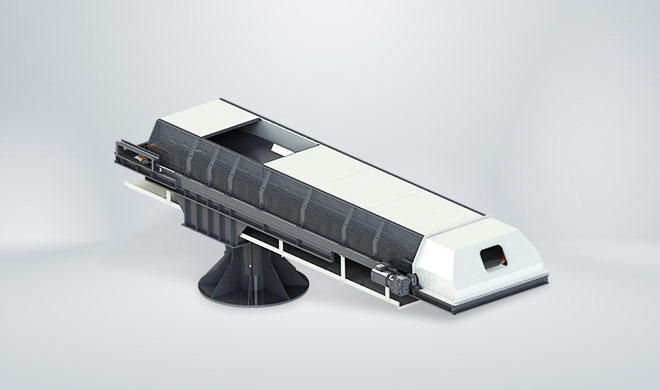
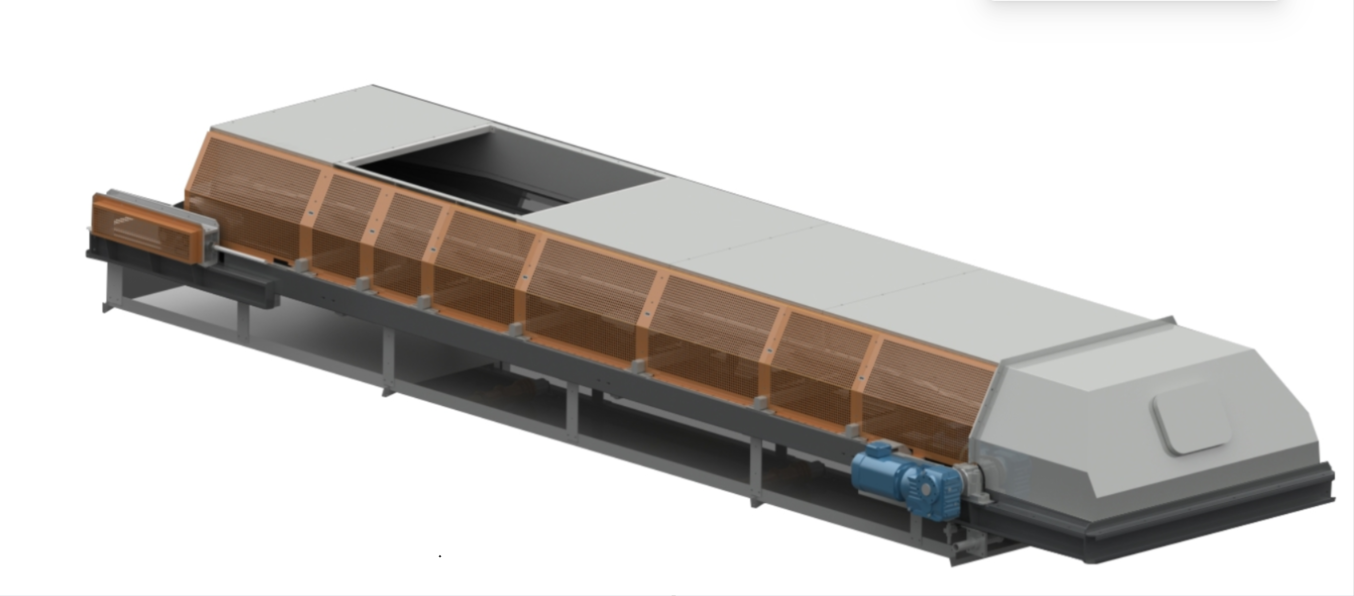
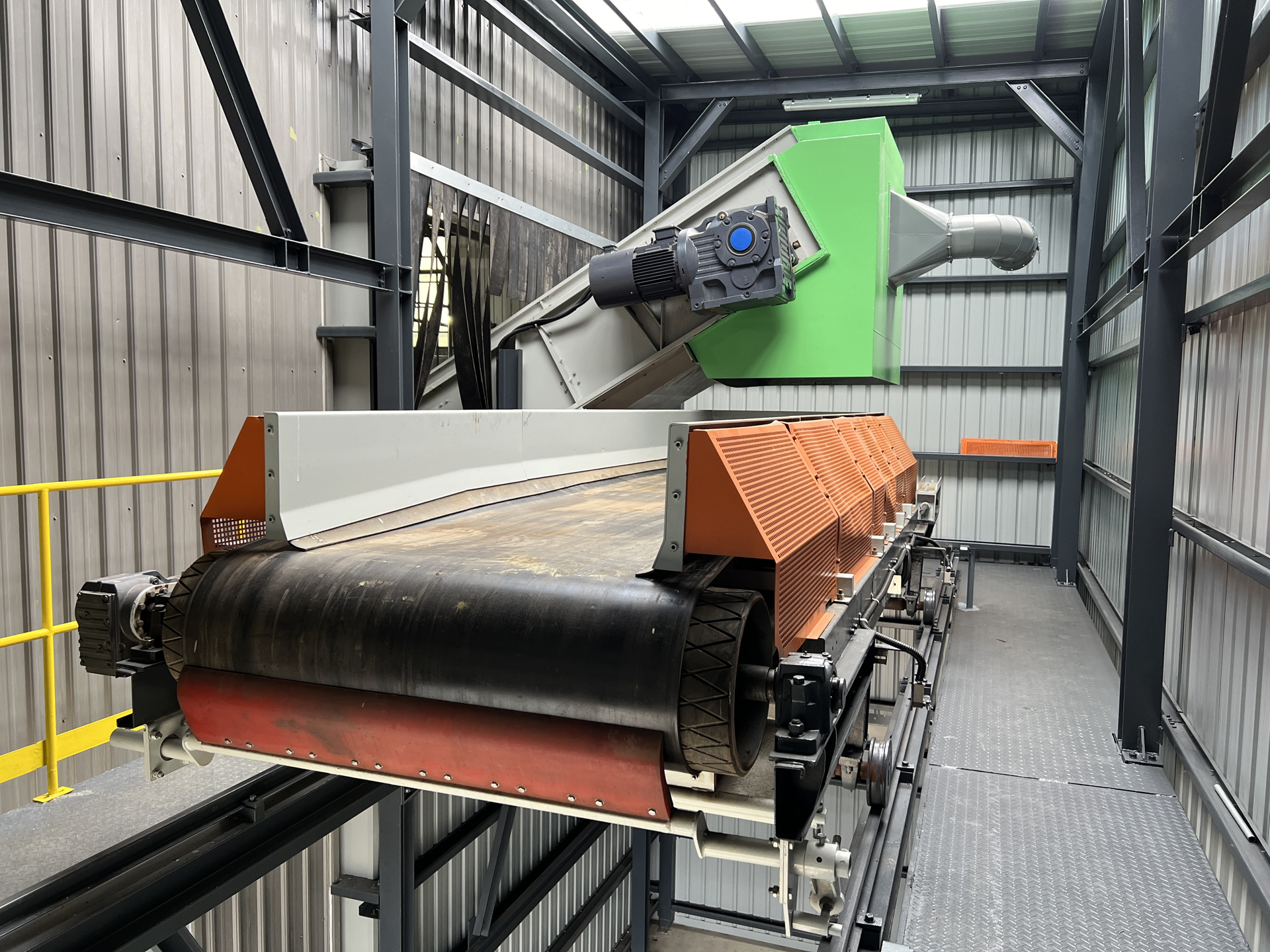
Its core structure is simple and compact, primarily consisting of the conveyor belt, drive unit (geared motor, bearings, drive pulley), idler system, driven unit, tensioning device, auxiliary protection devices (cleaner, feed chute, etc.), sealing unit, and receiving unit. Power is transmitted through the friction between the drive pulley and the conveyor belt, driving the belt to carry materials and complete continuous transport from the feed point to the discharge point. It accommodates horizontal, inclined, and — with special design — vertical conveying requirements.
Belt conveyors can operate continuously, with single-unit throughput ranging from several tons to thousands of tons per hour. Depending on the material throughput and particle size, belt widths from B500 to B2400 can be selected.
The belt conveyor sealing cover effectively isolates dust and odors generated during material transport. Auxiliary protection devices efficiently clean return-side carryback adhering to the belt. Material catch trays prevent material from falling through gaps on either side during transport.
Attachments can further enhance functionality, such as conversion into a walking conveyor or a slewing conveyor, meeting special requirements under specific conditions.
Core Advantages
-
The conveyor belt interior features a trough structure that gathers materials to prevent spillage. Excellent sealing is achieved with rubber skirt seals between the belt and sheet metal components, and sealing strips between the upper cover and sheet metal, effectively isolating dust and odors.
-
The unequal three-section idler design provides a larger effective cross-section for material passage and accommodates larger particle sizes. The three-section idler configuration effectively reduces belt misalignment, resulting in smoother overall operation.
-
Modular construction with a simple design and small footprint. Standardized drive unit, support idler, and tail unit components ensure high commonality and significantly reduce spare parts variety. Low failure rate, simple routine maintenance, and hassle-free long-term operation.
-
The improved slewing conveyor model can freely rotate and swing around the discharge point, offering multiple discharge positions and a wide stockpiling range. One unit can replace multiple machines, reducing operating costs.
-
The improved walking conveyor model can travel along a fixed direction, providing long discharge travel suitable for narrow, elongated material distribution spaces.
Technical Specifications
| Parameter | Specifications |
|---|---|
| Belt Width | 500—2400 mm |
| Conveying Inclination | 0—20 deg |
| Rated Throughput | 30—2000 m^3/h |
| Belt Speed | 0.3—2 m/s |
| Motor Power | Model-dependent (3—55 kW) |
| Max Single-Unit Length | Application-dependent (2—200 m) |
| Frame Material | Q235 carbon steel / SUS304 |
| Belt Material | Polyester EP / Nylon NN |
Application Scenarios
-
Mining and Quarrying: Quarries, crushed stone production lines, aggregate processing, raw ore transfer
-
Coal and Industrial Mining: Coal mines, coal washing and storage yards, coal lump/slurry transfer
-
Waste Recycling Industry: Construction and demolition waste, solid waste treatment, spoil transport, recycled aggregate production, waste incineration feed transfer
-
Metallurgy and Smelting: Steel plants, smelting plants, mineral powder and furnace charge transport
-
Grain and Agriculture: Grain depots, silos, feed mills — loading, unloading, and transfer of grains and cereals
Application Case
The Wujiang Construction Renewable Resource Disposal Project is both a key project in Wujiang District and a public welfare initiative to improve the environment. Located on the west side of Jing’er Road in the East Taihu Lake Resort Area, it has a total investment of RMB 199.5 million, covers 44.45 mu (approx. 29,633 m^2), and has a building area of 16,099.39 m^2. It consists of one 300,000-ton decoration waste processing line and one 300,000-ton demolition waste processing line. Once completed and operational, the project will achieve an annual processing capacity of 600,000 tons.
This project addresses the disposal of construction waste in Wujiang District, increasing the harmless treatment rate, reduction rate, and resource recovery rate of construction waste. It reduces the long-term occupation of limited urban land resources by construction waste, curbs the continuous expansion of land use driven by growing waste volumes, and mitigates the contamination of soil and groundwater caused by waste stockpiling.