Ningbo Recyclable Waste Treatment Project
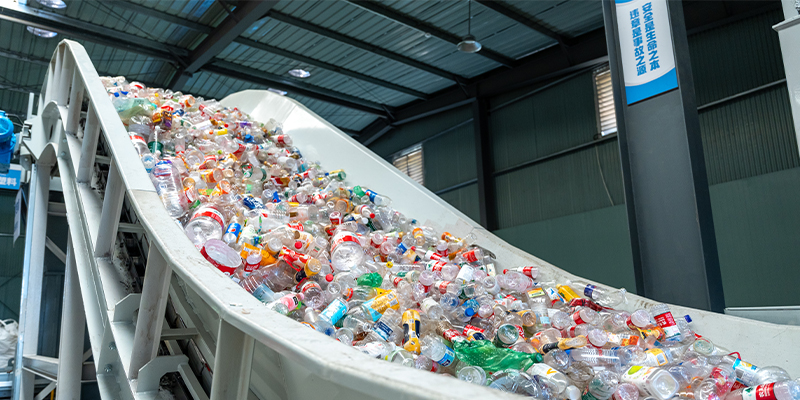
Serving 600,000 permanent residents in Ningbo with 492 recycling service points, this project leverages 12 domestically developed core intelligent sorting units to create an advanced combined sorting line and a mixed plastics sorting line. Through multi-process integration, plastics are classified into 13 categories, enabling efficient resource recycling. The project receives key support from both municipal and district governments and features comprehensive whole-process supervision and sustainable operation guarantees.
Case Overview
Serving 600,000 permanent residents in Ningbo with 492 recycling service points, this project leverages 12 domestically developed core intelligent sorting units to create an advanced combined sorting line and a mixed plastics sorting line. Through multi-process integration, plastics are classified into 13 categories, enabling efficient resource recycling. The project receives key support from both municipal and district governments and features comprehensive whole-process supervision and sustainable operation guarantees.
Project Parameters
| Dimension | Details |
|---|---|
| Scenario | Mixed Recyclables |
| Location | Zhejiang |
| Capacity | 24 t |
Project Background and Treatment Objectives
The Ningbo Recyclable Waste Treatment Project falls under the Mixed Recyclables scenario in Zhejiang, with a processing capacity of 24 t. Material types include paper, metals, and high- and low-value plastics.
Serving 600,000 permanent residents in Ningbo with 492 recycling service points, this project leverages 12 domestically developed core intelligent sorting units to create an advanced combined sorting line and a mixed plastics sorting line. Through multi-process integration, plastics are classified into 13 categories, enabling efficient resource recycling. The project receives key support from both municipal and district governments and features comprehensive whole-process supervision and sustainable operation guarantees.
Process Route and System Configuration
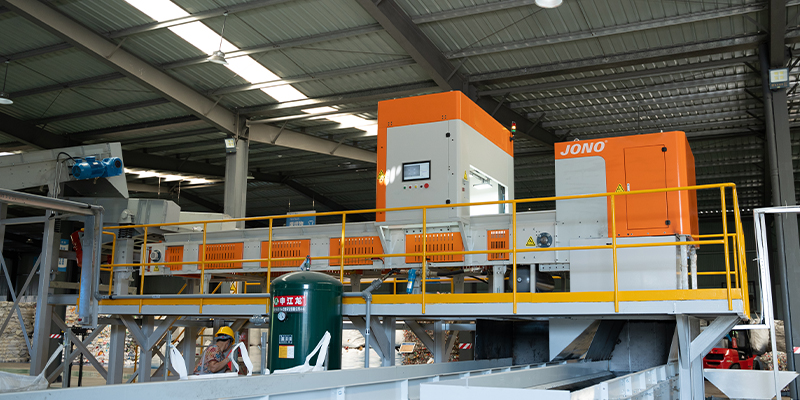
Centered on the project’s treatment objectives, the solution focuses on process organization, core equipment coordination, and material sorting pathways, forming a stable treatment and resource recovery process.
Serving 600,000 permanent residents in Ningbo with 492 recycling service points, this project leverages 12 domestically developed core intelligent sorting units to create an advanced combined sorting line and a mixed plastics sorting line. Through multi-process integration, plastics are classified into 13 categories, enabling efficient resource recycling.
Sorted Output and Resource Recovery Value
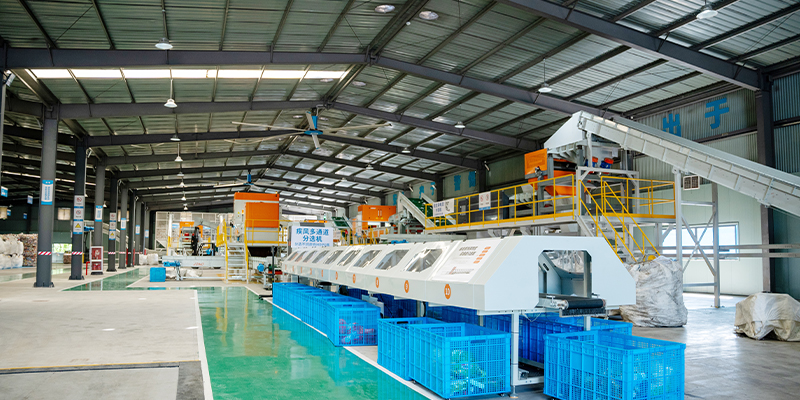
The project’s value is reflected in material resource recovery, final output materials, environmental compliance, and operational efficiency.
Serving 600,000 permanent residents in Ningbo with 492 recycling service points, this project leverages 12 domestically developed core intelligent sorting units to create an advanced combined sorting line and a mixed plastics sorting line. Through multi-process integration, plastics are classified into 13 categories, enabling efficient resource recycling.