Vietnam Mixed Household Waste Project
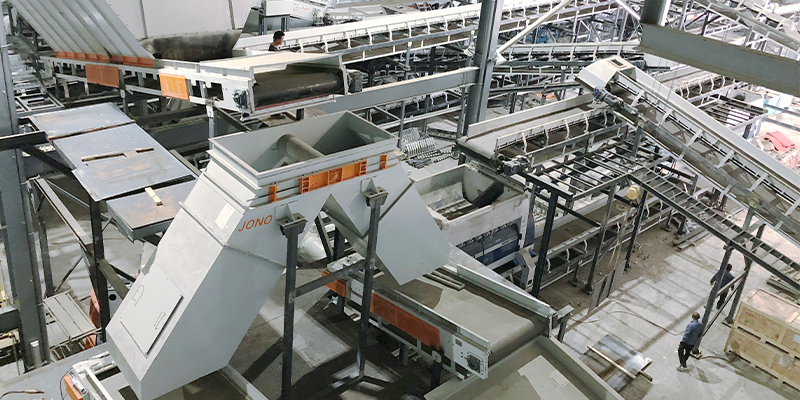
The project spans 1.5 hectares with a total investment of RMB 400 million and processes 300 tons of mixed waste per day. Using a process of "shredding + multi-stage sorting + drying + fine shredding," the facility separates metals, inerts and PVC through mechanical sorting and optical technologies, dries and dewaters combustible materials, and ultimately produces SRF fuel. Output materials include ferrous metals, non-ferrous metals, inert materials, PVC, fine sand, low-value combustibles, and finished SRF, which are delivered to power plants for incineration or sold externally.
Case Overview
The project spans 1.5 hectares with a total investment of RMB 400 million and processes 300 tons of mixed waste per day. Using a process of “shredding + multi-stage sorting + drying + fine shredding,” the facility separates metals, inerts and PVC through mechanical sorting and optical technologies, dries and dewaters combustible materials, and ultimately produces SRF fuel. Output materials include ferrous metals, non-ferrous metals, inert materials, PVC, fine sand, low-value combustibles, and finished SRF, which are delivered to power plants for incineration or sold externally.
Project Parameters
| Dimension | Details |
|---|---|
| Scenario | Material Recovery Facility (MRF) |
| Location | Taiwan, China |
| Capacity | 300 T/D |
Project Background and Treatment Objectives
The Vietnam Mixed Household Waste Project falls under the Material Recovery Facility (MRF) scenario, located in Taiwan, China, with a processing capacity of 300 T/D.
The project spans 1.5 hectares with a total investment of RMB 400 million and processes 300 tons of mixed waste per day. Using a process of “shredding + multi-stage sorting + drying + fine shredding,” the facility separates metals, inerts and PVC through mechanical sorting and optical technologies, dries and dewaters combustible materials, and ultimately produces SRF fuel.
Output materials include ferrous metals, non-ferrous metals, inert materials, PVC, fine sand, low-value combustibles, and finished SRF, which are delivered to power plants for incineration or sold externally.
Process Route and System Configuration
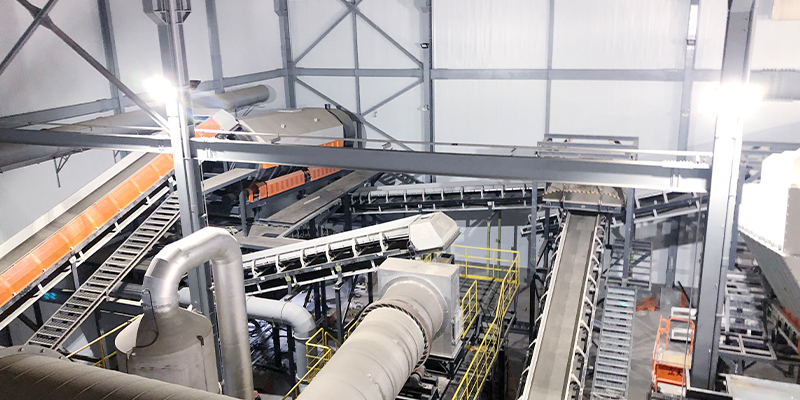
Centered on the project’s treatment objectives, the solution focuses on process organization, core equipment coordination, and material sorting pathways, forming a stable treatment and resource recovery process.
Using a process of “shredding + multi-stage sorting + drying + fine shredding,” the facility separates metals, inerts and PVC through mechanical sorting and optical technologies, dries and dewaters combustible materials, and ultimately produces SRF fuel.
Sorted Output and Resource Recovery Value
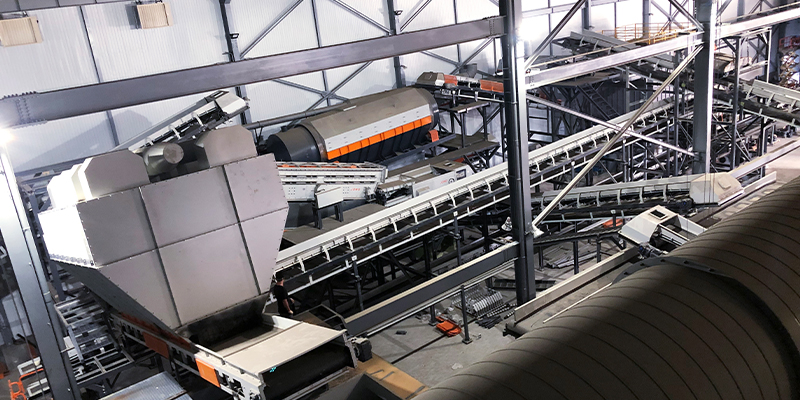
The project’s value is reflected in material resource recovery, final output materials, environmental compliance, and operational efficiency.
Using a process of “shredding + multi-stage sorting + drying + fine shredding,” the facility separates metals, inerts and PVC through mechanical sorting and optical technologies, dries and dewaters combustible materials, and ultimately produces SRF fuel.
Output materials include ferrous metals, non-ferrous metals, inert materials, PVC, fine sand, low-value combustibles, and finished SRF, which are delivered to power plants for incineration or sold externally.